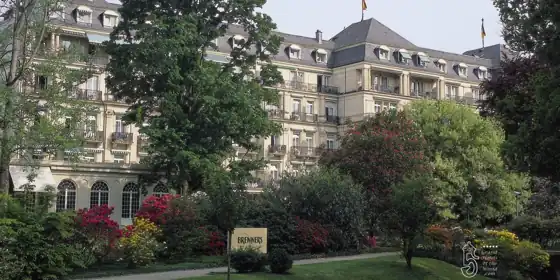
Brenner's Park Hotel
Baden-Baden, Germany
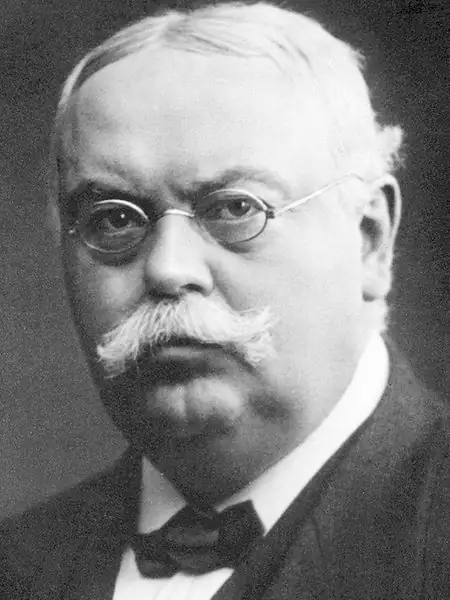
1862 – 1918
His family founded the Oetker Collection: Brenners, Cap-Eden-Roc, Le Bristol. 3 hotels of the collection keep track of him.
August Oetker never ran a hotel. He was a pharmacist from Bielefeld who sold baking powder in ten-pfennig packets, and built his success on a deliberate marketing strategy from the start. Yet the family business he founded became the fortune behind Brenners Park-Hotel, the Hôtel du Cap-Eden-Roc and Le Bristol, the cornerstones of what became the Oetker Collection.
August Oetker was born on 6 January 1862 in Obernkirchen, a small town in Schaumburg, the son of the master baker August Adolph Oetker and of Bertha, a lawyer’s daughter. After the Abitur at the Adolfinum in Bückeburg in 1878, he apprenticed at the Ratsapotheke in Stadthagen, reportedly walking some 16 kilometres a day from home, and passed his pharmacy examination in 1881.
Posts followed in Langen near Offenbach and elsewhere; around 1884 he joined a Hanau firm making pharmacy equipment, where he met Karoline, whom he married on 20 March 1889. In between he studied natural sciences in Berlin and, in 1888, earned a doctorate in botany at Freiburg with a thesis on pollen. His first business ventures in Berlin, however, came to nothing.
In 1891 Oetker bought the Aschoff pharmacy in Bielefeld. Prompted by his cousin Louis Dohme in the United States, who had told him about Horsford’s phosphate baking powder, he worked out a stable, tasteless formula and from 1893 sold it in small packets, each measured for 500 grams of flour. He called it Backin. The price of ten pfennigs would hold for about seventy years, and production moved from his wife’s kitchen to a garage and then to a proper factory.
Honesty requires a nuance: the baking powder itself had been developed decades earlier by Eben Norton Horsford. Oetker’s contribution was to make it reliable, portioned and trusted in ordinary kitchens. He built his first factory in 1900 on Lutterstraße, still the site of the company’s headquarters, and patented his process for durable baking powder on 21 September 1903.
Oetker sold confidence as much as powder. Products came with free recipes and usage tips, test and demonstration kitchens proved that they worked, and from 1899 the Dr. Oetker trademark guaranteed the product. By 1906 fifty million Backin packets had been sold. In 1908 he set up an in-house advertising department with a budget of about six per cent of sales; in 1910 came the first Dr. Oetker cookbooks and a cinema advertising film. Puddings joined the range, and from 1907 employees shared in the success through perks such as company outings, and he supported a works committee.
His only son Rudolf, born in 1889, joined the management in 1914 but was mortally wounded near Verdun. Seriously ill from 1917, August Oetker made his long-standing employee Fritz Behringer a partner, and died in Bielefeld on 10 January 1918, four days after his fifty-sixth birthday. His will kept the firm in family hands for his grandson Rudolf-August, born in 1916, who took the helm in 1944 after a bombing raid killed his mother, stepfather and half-sisters.
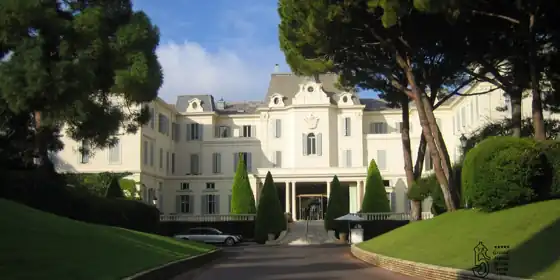
The hotel story began in Baden-Baden: the Oetker family took a stake in Brenners Park-Hotel during its expansion of 1923 to 1925, and in 1941 Rudolf-August bought the hotel from the Brenner family, the first luxury property of the future group. According to the group’s own history, he first saw the Hôtel du Cap-Eden-Roc in 1964 while sailing past Cap d’Antibes with his new bride Maja; he bought it in 1969, and Maja redecorated it.
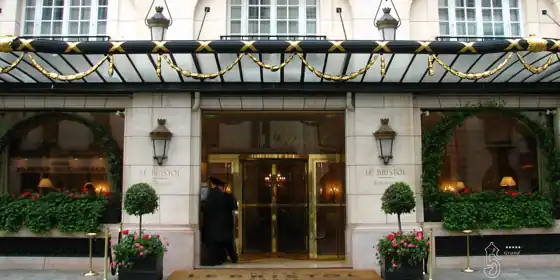
In 1978 Le Bristol, opened in Paris in April 1925 by Hippolyte Jammet, joined the family; in 2011, according to the hotel, it became the first in France to receive the official Palace distinction. Château Saint-Martin in Vence followed, and today the group, long known as the Oetker Collection and now as Oetker Hotels, spans hotels from The Lanesborough in London to Eden Rock in St Barths, a family fortune that began with a pharmacist’s ten-pfennig packets.
Sources Wikipedia (DE), “August Oetker” · Wikipedia (DE), “Rudolf-August Oetker” · Oetker Hotels, “Brenners Park-Hotel & Spa: the history” · Oetker Hotels, “Oetker Hotels history” · Wikipedia (FR), “Hôtel du Cap-Eden-Roc” · Oetker Hotels, “Le Bristol Paris: 100 years of history” · Wikipedia (EN), “Oetker Collection”
1871: Dr August Oetker opened a pharmacy in Bielefled.
1891: Experimenting with different products he invented Baking Powder. Clever Advertising made the invention a big succes.
1900: Construction of a factory which is the base of today’s Dr Oetker Food Company.
1923: The Oetker family becomes shareholder in the famous Brenners Park Hotel.
1941: Rudolf August Oetker, grandson of the company founder buys the majority of the shares in the Park Hotel.
1963: Oetker marries Countess Maja von Malaise, a stylish teacher of Mathematics. She later adds a lot of elegance to the Hotels.
1968: Acquisition of the Hotel du Cap in Antibes.
1978: Acquisition of Hotel Le Bristol in Paris.
1994: Acquisition of the Chateau Saint Martin in Venice.
2010: Creation of the Oetker Collection stonger unifying the previously very seperately managed Oetker Hotels.
2012: Opening of the Palais Namaskar in Marrakech, a Hotel under Oetker management. Oetker's family at the Hotel du Cap Eden Roc in Antibes .
Baden-Baden, Germany
Antibes, France
Paris, France