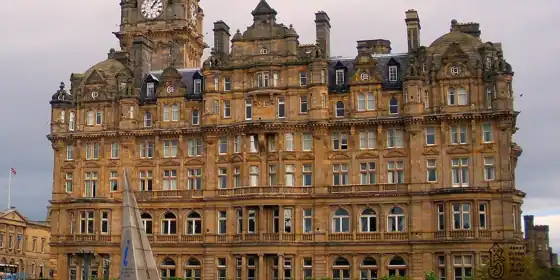
The Balmoral
Edinburgh, United Kingdom
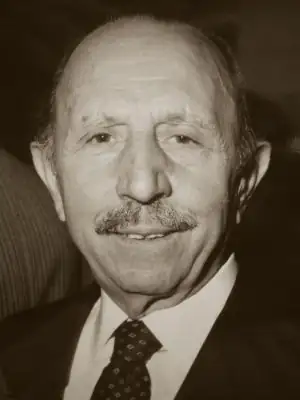
1908 – 2007
Founder of the Forte group; his son created Rocco Forte Hotels. 6 hotels of the collection keep track of him.
Charles Forte arrived in Scotland as a small boy from a village in Lazio and built, from a single London milk bar, one of Britain’s largest hotel and catering empires. At its height his group owned Grosvenor House, the George V and the Plaza Athénée, and when it was lost in a hostile takeover, his children rebuilt a family of grand hotels in his wake.
Charles Forte was born on 26 November 1908 in Mortale, a hamlet in the province of Frosinone now called Monforte, in the commune of Casalattico. The family emigrated to Scotland, where Charles arrived aged about four. He went to Alloa Academy and St Joseph’s College in Dumfries, then spent two years studying in Rome. Back in Britain, he joined his father, who ran a café with two cousins in the seaside resort of Weston-super-Mare. At twenty-one he was in Brighton, managing an establishment called the Venetian.
In 1935, aged twenty-six, Forte opened his first milk bar on Regent Street, the Strand Milk Bar, with backing from partners Eric and Sidney Hartwell. When war broke out he was interned on the Isle of Man as an Italian national, and released after about three months. He married Irene Chierico, whose family ran a delicatessen in Soho; the couple had six children, among them Rocco and Olga.
After the war he bought key properties around Piccadilly, among them Rainbow Corner, the Café Royal in 1954 and, in 1958, the Waldorf, his first step into hotels, earning the nickname Mr Piccadilly. He won the catering contract for the 1951 Festival of Britain, ran the first catering facility at Heathrow in the 1950s, and opened Britain’s first full motorway service station, at Newport Pagnell on the M1.
In 1970 Forte Holdings merged with Trust Houses to form Trust Houses Forte, renamed Trusthouse Forte in 1979. The two cultures clashed: in 1972 the group fought off a takeover bid by Allied Breweries, and the Trust Houses directors who had opposed Forte resigned. The group held Grosvenor House in London and, in Paris, the George V, the Plaza Athénée and the Hôtel de la Trémoille, which Forte had bought together in the mid-1960s, alongside the Little Chef and Travelodge brands that brought hotelkeeping to the motorway age.
One prize eluded him. In his bid for the Savoy group he built up 69 per cent of the shares, but the Savoy’s weighted voting shares left him with only 42 per cent of the votes, and he never gained control. Honours came instead: a knighthood in 1970, conferred by the Queen Mother, and a life peerage in 1982 as Baron Forte, of Ripley in Surrey.
Forte handed the chief executive role to his son Rocco in the early 1980s and the chairmanship in the early 1990s. Then, in 1995, the media group Granada launched a hostile bid; in January 1996 it won control with a tender offer of about 3.9 billion pounds, leaving the family with some 350 million pounds in cash. The hotels were broken up and sold, the George V to Four Seasons, Grosvenor House to Marriott.
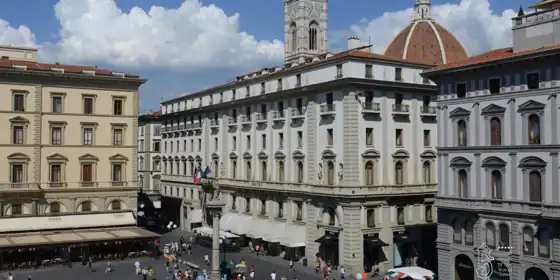
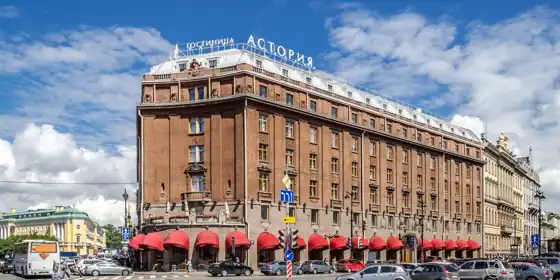
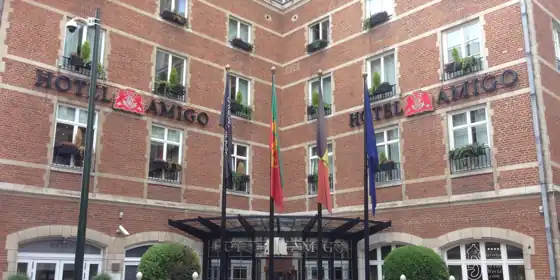
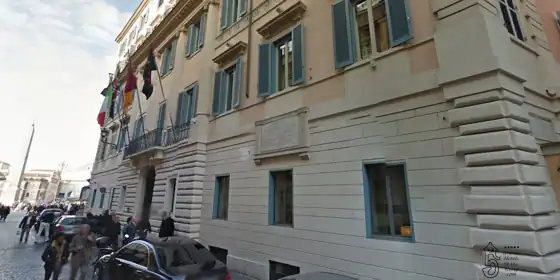
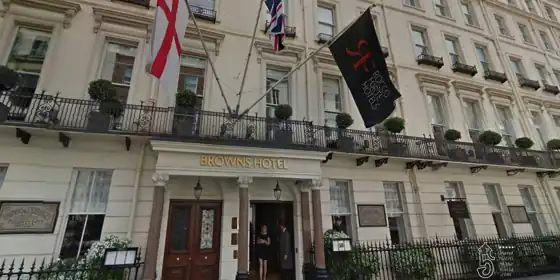
Rocco Forte and his sister Olga Polizzi started again in 1996 with RF Hotels, today Rocco Forte Hotels. The Balmoral in Edinburgh, once a Forte house, came back first in 1997, followed the same year by the Hotel Savoy in Florence, the Hotel Astoria in St Petersburg in 1999, the Hotel Amigo in Brussels and the Hotel de Russie in Rome in 2000, and Brown’s Hotel in London in 2003. In 2001 the Forte name itself returned to the family.
Lord Forte died in his sleep at his London home on 28 February 2007, aged ninety-eight, and was buried in West Hampstead Cemetery; he had told his own story in an autobiography published in 1986. Tributes poured in from the profession: Bob Cotton of the British Hospitality Association called him a true giant of the industry, and former Hilton chief Sir David Michels said he was not far short of a genius. His legacy lives on in the hotels his children still run.
Sources Wikipedia (EN), “Charles Forte, Baron Forte” · Wikipedia (EN), “Forte Group” · Wikipedia (EN), “Rocco Forte Hotels” · The Caterer, “Industry pays tribute to true giant Lord Forte” (2007) · FundingUniverse, “Trusthouse Forte PLC History” · Wikipedia (EN), “Hugh Wontner” · Historic Hotels of the World / famoushotels.org, “Forte, Charles”
1935: Charles Forte, an Italian immigrant to the UK, opens a « Milk Bar » on Regents street in London … the company becomes the Forte Hotel Group (Trusthouse Forte).
1993: The Forte Hotel group faces a hostile takeover bid from the Media Conglomerate Granada the founding family is ejected with a settlement payment of £350 million. Two of the 6 children, Rocco Forte and his younger sister Olga Polizzi decide to reinvent their fathers Hotel business.
1996 May: Sir Rocco Forte founds RF Hotels.
1997 February: Opening of Balmoral Hotel in Edinburgh.
1997 December: Acquisition of Hotel Savoy in Florence.
1999 January: Acquisition of Hotel Astoria in St Petersburg.
2000 January: Acquisition of Hotel Amigo in Brussels.
2000 April: Opening of Hotel de Russie in Rome.
2003 July: Acquisition of Brown's Hotel in London.
2006 March: Opening of Ville Kennedy (Villa Speyer) in Frankfurt.
2006 October: Opening of Hotel de Rome (formally seat of Dresdner Bank) in Berlin.
2007: Rocco Forte Hotels are renamed Rocco Forte Collection. Rocco Forte at the Hotel Carlton in Cannes, the Brown's Hotel in London , the Balmoral in Edinburgh , the Hotel Amigo in Brussels , the Hotel Astoria in St. Petersburg , the Hotel de Rome in Berlin , the Villa Kennedy in Frankfurt , the Hotel de Russie in Rome and the Hotel Savoy in Florence .
Rocco Forte at the Hotel Carlton in Cannes, the Brown's Hotel in London , the Balmoral in Edinburgh , the Hotel Amigo in Brussels , the Hotel Astoria in St. Petersburg , the Hotel de Rome in Berlin , the Villa Kennedy in Frankfurt , the Hotel de Russie in Rome and the Hotel Savoy in Florence .
Edinburgh, United Kingdom
Florence, Italy
St. Petersburg, Russia
Brussels, Belgium
Rome, Italy
London, United Kingdom